
Fundraising plays a vital role in supporting organizations, causes, and businesses around the world. From nonprofit charities and educational institutions to startups and community projects, fundraising provides the financial resources needed to turn ideas into action. While the goals of fundraising may vary, the underlying principles remain largely the same: connecting with supporters and securing sustainable funding.
Over time, fundraising has evolved into several distinct forms, each with its own strengths, challenges, and ideal use cases. Understanding these forms helps organizations choose the right approach and increase their chances of long-term success.
This article explores the four major forms of fundraising in detail. Written in clear, natural English, it is designed to educate readers, support strong SEO performance, and remain fully compliant with Google AdSense policies.
Understanding Fundraising and Its Importance
Fundraising is the process of gathering financial support from individuals, groups, or institutions to achieve a specific purpose. These purposes may include charitable work, social impact initiatives, research, political campaigns, or business development.
Effective fundraising is not just about asking for money. It involves building trust, communicating value, and maintaining long-term relationships with supporters. Organizations that understand this tend to achieve more consistent and sustainable results.
At its core, fundraising is about aligning a mission with the interests and values of potential supporters.
Why Fundraising Takes Different Forms
No single fundraising method works for every organization or situation. Factors such as audience size, funding goals, organizational structure, and available resources influence which approach is most effective.
Some fundraising methods focus on personal relationships, while others rely on large-scale outreach. Some prioritize speed, while others emphasize long-term engagement.
This diversity has led to four major forms of fundraising that are widely used across sectors. Each form serves a different purpose and offers unique advantages.
The First Major Form: Individual Fundraising
Individual fundraising focuses on raising funds directly from individual supporters. This is one of the most common and traditional forms of fundraising, especially for nonprofits and community organizations.
Individuals often contribute because they believe in a cause, feel emotionally connected, or want to make a personal impact. These donations can range from small, one-time gifts to large, recurring contributions.
Building trust and maintaining communication are essential elements of successful individual fundraising.
Characteristics of Individual Fundraising
Individual fundraising relies heavily on relationships. Supporters are more likely to give when they feel valued and informed.
This form of fundraising often includes direct mail campaigns, email appeals, social media outreach, and personal conversations. Storytelling plays a major role, helping donors understand how their contributions make a difference.
Consistency and transparency are key to retaining individual donors over time.
Benefits of Individual Fundraising
One major benefit of individual fundraising is flexibility. Donations can be used for various needs depending on organizational priorities.
Individual fundraising also helps build a loyal supporter base. Even small donations can add up when many people contribute regularly.
Additionally, individual donors often become advocates, spreading awareness and encouraging others to support the cause.
Challenges of Individual Fundraising
Despite its advantages, individual fundraising can be time-consuming. Managing donor relationships, communication, and engagement requires ongoing effort.
Donor fatigue is another challenge. Supporters may become overwhelmed if asked to give too frequently.
To succeed, organizations must balance outreach with appreciation and avoid treating donors as one-time transactions.
The Second Major Form: Corporate Fundraising
Corporate fundraising involves partnerships between organizations and businesses. Companies may provide financial support as part of corporate social responsibility initiatives, sponsorships, or brand alignment strategies.
This form of fundraising often includes sponsorships, matching gift programs, and cause-related marketing campaigns.
Corporate fundraising can provide significant funding while also enhancing visibility and credibility.
How Corporate Fundraising Works
Corporate fundraising is usually built on mutual benefit. Businesses support causes that align with their values or target audience, while organizations gain access to funding and broader exposure.
These partnerships may involve event sponsorships, product collaborations, or employee engagement programs.
Clear communication and alignment of goals are essential for successful corporate fundraising relationships.
Advantages of Corporate Fundraising
One key advantage is scale. Corporate partners can contribute larger amounts than individual donors in many cases.
Corporate fundraising can also open doors to new networks and resources, including marketing support and expertise.
Long-term partnerships with businesses can provide stable funding and strategic growth opportunities.
Limitations of Corporate Fundraising
Corporate fundraising often requires significant preparation and negotiation. Organizations must demonstrate professionalism and measurable impact.
There may also be restrictions on how funds can be used, depending on the agreement.
Maintaining alignment between organizational values and corporate interests is critical to preserving trust and reputation.
The Third Major Form: Foundation and Grant Fundraising
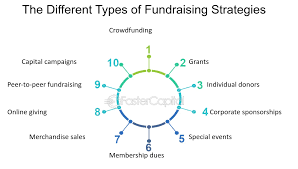
Foundation fundraising involves securing funds from private foundations, public foundations, or government grant programs. These funds are typically awarded through formal application processes.
Grants are often designated for specific projects, research, or programs, making them an important source of targeted funding.
This form of fundraising emphasizes planning, documentation, and accountability.
Understanding Grant-Based Fundraising
Grant fundraising requires organizations to submit detailed proposals outlining their mission, objectives, and expected outcomes.
Foundations evaluate applications based on alignment with their priorities, potential impact, and organizational capacity.
Successful grant fundraising depends on strong writing skills, clear data, and realistic planning.
Benefits of Foundation and Grant Fundraising
Grants can provide substantial funding for specific initiatives. This allows organizations to expand programs, invest in research, or launch new projects.
Grant funding also adds credibility, as it signals that an organization has been vetted by an external institution.
Multi-year grants can support long-term planning and stability.
Challenges of Grant Fundraising
The grant application process is often competitive and time-intensive. There is no guarantee of approval, even for strong proposals.
Grant funds are usually restricted, limiting flexibility in how money is spent.
Reporting requirements can also be demanding, requiring detailed tracking and evaluation.
The Fourth Major Form: Event-Based Fundraising
Event-based fundraising involves organizing activities or events to raise funds and awareness. Examples include charity runs, auctions, galas, and community gatherings.
Events provide opportunities for direct engagement, storytelling, and relationship-building.
While events can be resource-intensive, they often create memorable experiences that strengthen supporter connections.
How Event-Based Fundraising Functions
Event fundraising combines participation and contribution. Attendees may pay entry fees, purchase items, or make donations during the event.
Events also attract media attention and social sharing, expanding reach beyond immediate participants.
Successful events require careful planning, promotion, and follow-up.
Advantages of Event-Based Fundraising
Events offer strong engagement opportunities. Supporters can see the organization’s mission in action and connect with others who share their values.
They also serve as powerful awareness tools, attracting new donors and volunteers.
Events can generate both immediate funds and long-term relationships.
Challenges of Event-Based Fundraising
Events require upfront investment of time, money, and staff effort. Poor planning can result in low attendance or financial loss.
External factors such as weather or economic conditions may affect outcomes.
Measuring return on investment is important to ensure events remain sustainable.
Comparing the Four Major Forms of Fundraising
Each fundraising form serves a different purpose. Individual fundraising builds community support, corporate fundraising leverages partnerships, grant fundraising enables targeted projects, and event-based fundraising enhances engagement.
Most successful organizations use a combination of these methods rather than relying on just one.
Diversification reduces risk and creates multiple income streams.
Choosing the Right Fundraising Mix
Selecting the right fundraising approach depends on organizational size, mission, and capacity.
Smaller organizations may focus on individual and event-based fundraising, while larger institutions often combine all four forms.
Understanding audience preferences and resource availability helps guide strategic decisions.
The Role of Technology in Modern Fundraising
Technology has transformed all four fundraising forms. Online platforms enable digital donations, virtual events, and global outreach.
Data analytics help organizations track performance and personalize communication.
Technology increases efficiency but must be used thoughtfully to maintain authenticity and trust.
Ethical Considerations in Fundraising
Ethical fundraising prioritizes transparency, honesty, and respect for donors.
Clear communication about how funds are used builds trust and credibility.
Ethical practices are essential for long-term sustainability and public confidence.
Measuring Fundraising Success
Success is not measured only by money raised. Donor retention, engagement, and impact are equally important.
Tracking key performance indicators helps organizations improve strategies and allocate resources effectively.
Continuous evaluation supports growth and accountability.
Long-Term Sustainability in Fundraising
Sustainable fundraising focuses on relationships rather than one-time transactions.
Investing in communication, appreciation, and stewardship strengthens donor loyalty.
Long-term success comes from consistency, trust, and adaptability.
The Future of Fundraising
Fundraising continues to evolve with social and technological changes. Digital platforms, social media, and global connectivity are shaping new opportunities.
Hybrid approaches that combine traditional and digital methods are becoming increasingly common.
Organizations that embrace innovation while maintaining core values will remain resilient.
Final Thoughts on the Four Major Forms of Fundraising
The four major forms of fundraising—individual, corporate, foundation, and event-based—each play a critical role in supporting organizations and causes.
Understanding their strengths and limitations allows organizations to build balanced and effective fundraising strategies.
When approached thoughtfully, fundraising becomes more than a financial activity; it becomes a powerful tool for connection, impact, and long-term growth.
By aligning mission, strategy, and relationships, organizations can unlock the full potential of fundraising and create lasting positive change.
Summary:
An informative article that explores the four major types of fundraising.
Keywords:
fundraising forms, business fundraising, fundraising participants
Article Body:
Fundraising is, without a doubt, extremely challenging work. For any of you with experience in this line of work, you will understand what I mean. For the rest of you, go out and volunteer your time with a local non-profit organization. After that, I think you will understand. While this can be a challenging profession, it continues to be quite rewarding in many respects. This article was drafted with the new fundraising coordinator in mind. So listen up, kids!
There are four major forms of fundraising. When one mentions fundraising to the average person, the image of a well-meaning person going door-to-door begging for support immediately comes to mind. While most of us have been there at some point or other, there is a lot more to this business than meets the eye. And yes, my friends, this is a business. We are in the business of managing relationships; relationships which, more often than not, are the key determining factor for success.
The first major form of fundraising is dealing with institutional grantors. These organizations are often the most difficult to deal with, due to the inherent bureaucratic nature of these types of organizations. On the other hand, grants and endowments from these organizations can often amount to incredible sums of money. For this reason alone, they should not be dismissed. You may have to invest a lot of time and energy into convincing these institutional organizations into supporting your particular cause, and this where the business of managing relationships comes into play. A single grant from one of these groups could secure the future of your non-profit activities.
The next significant form of fundraising is the promotion of special events and product sales. While this area could potentially include thousands of ideas, there is a central theme between them all. What is the donor getting in exchange for their donation? These types of fundraisers are labor intensive, and require a lot of detailed planning. In the case of event planning, spend the majority of your time on ticket sales. While you may want to obsess over every little event detail, it won’t really matter if people do not show up.
Direct marketing is another one of the major fundraising types. This approach includes direct mailings, telemarketing, paid advertising, public service announcements, and door-to-door canvassing. Direct marketing can be extremely effective, as it affords your organization the ability to reach out to a vast number of potential donors. In this area, it is crucially important to have a reliable donor list. There is no point spending resources trying to ask individuals or organizations for donations, if they are not connected with your cause in some way. Be sure that your direct marketing efforts are highly targeted, and you will undoubtedly achieve the desired results.
Last, but not least, we explore the idea of approaching individual donors. This approach is very similar to that of institutional donors, but it is geared towards well-to-do individuals. Individual donors can contribute to your cause in a number of different ways. One area that is common to individual donors is the planned gift. In simple terms, this refers to the choice of an individual to leave a portion of their estate or life insurance policy to your organization. Approaching individual donors should be left to your more experienced team members. As we mentioned before, fundraising is the business of managing relationships. A mentor once told me that “80% of your money should come from 20% of your donors”. Wise words, indeed!


Tinggalkan Balasan